


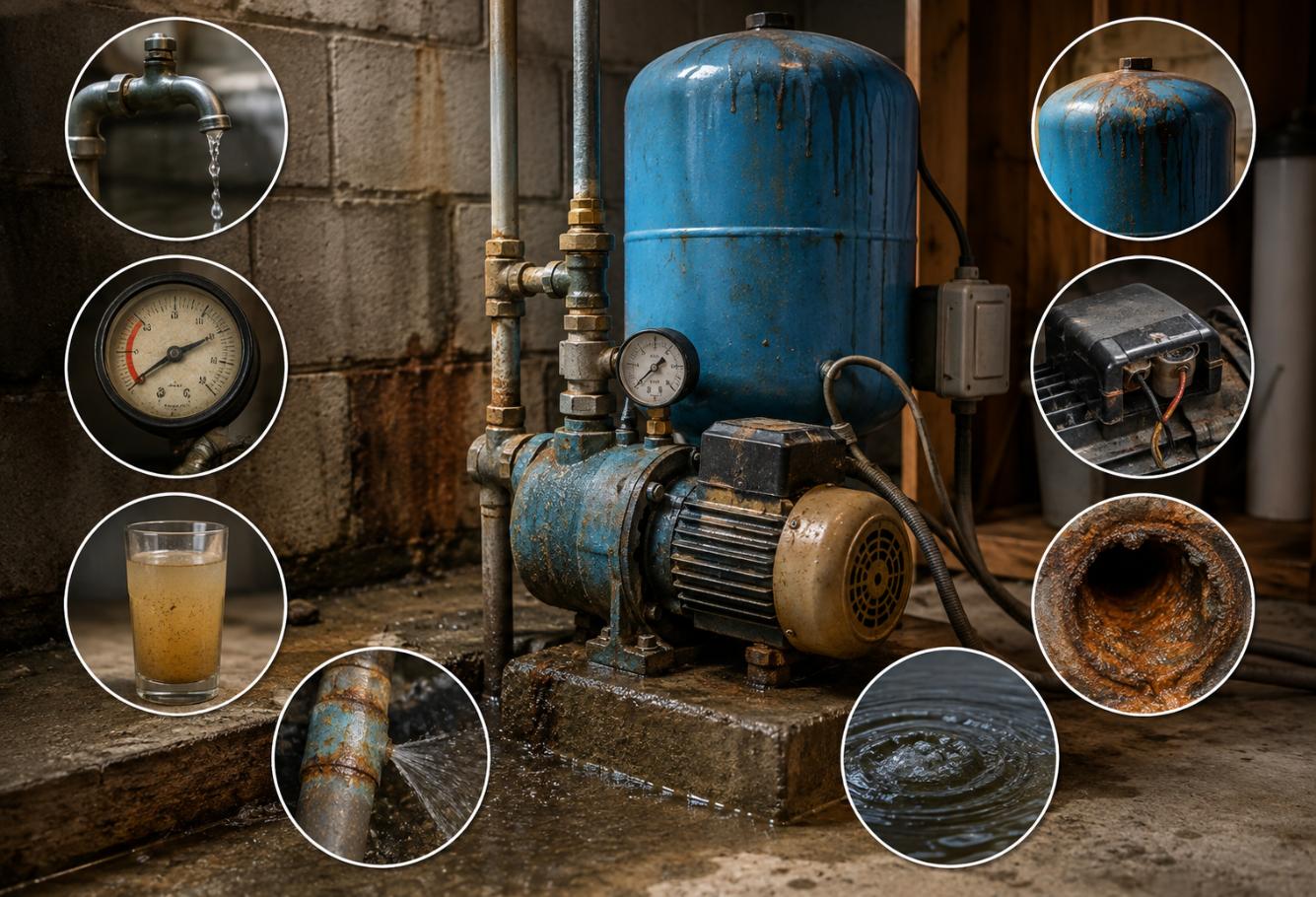
When your home depends on a private well, the pump is what keeps water moving to your faucets, showers, toilets, and appliances. For homeowners in Kingston, WA, changes in water pressure or pump behavior can be more than a minor inconvenience. They may be early signs that the well system needs attention.
A failing well pump can cause low or inconsistent water pressure, unusual noises, air in the plumbing, dirty water, frequent pump cycling, higher electricity use, or a complete loss of water. Some of these symptoms can also come from pressure tanks, electrical components, plumbing leaks, or changes within the well, so a professional evaluation is often the best way to identify the actual cause.
What local homeowners should know
-
A sudden loss of water does not automatically mean the well pump itself has failed.
-
Frequent cycling can put additional wear on a pump and may point to a pressure tank, control, plumbing, or pump problem.
-
Changes in water clarity can indicate sediment or other well-system conditions that deserve investigation.
-
Properties around Kingston and the Kitsap Peninsula can have different well depths, equipment configurations, and groundwater conditions.
-
Addressing warning signs early may help property owners avoid an unexpected loss of water.
Why Well Pump Problems Matter in Kingston
Well pump problems matter in Kingston because private-well households rely on their own equipment to bring groundwater into the home, and a pump or system failure can interrupt the property’s water supply. Unlike homes served by a municipal water connection, private-well properties depend on several components working together correctly.
Kingston sits on the northern end of the Kitsap Peninsula, with rural and residential properties extending toward places such as Eglon, Indianola, Hansville, and Port Gamble. Private well systems in the broader Kitsap County area can vary considerably from one property to another.
Crabtree Well Drilling helps property owners understand well and pump concerns and determine what part of the system may require attention. After an initial assessment, we can focus on the actual source of the problem rather than assuming every water-pressure issue requires a new pump.
Local Data or Field Observations
Local well conditions are property-specific, so symptoms should be evaluated in the context of the individual well, pump, pressure system, and plumbing. Without verified property-specific information, pump age, well depth, groundwater level, and equipment condition should not be assumed based only on a Kingston address.
For local homeowners, this means two nearby properties may experience similar symptoms for different reasons. A pressure problem on one property might involve the pump, while another could involve a pressure tank, electrical control, plumbing leak, or condition within the well.
That is why diagnosing the system as a whole is more useful than replacing components based on symptoms alone.
How a Failing Well Pump Can Affect Your Home
A failing well pump can affect water pressure, water availability, plumbing performance, and the reliability of everyday household routines. In a Kingston home that relies entirely on a private well, even an intermittent pump problem can quickly affect showers, laundry, dishwashing, toilets, and other normal water use.
A pump that struggles to maintain pressure may also run differently than it normally does. If the underlying issue is allowed to continue, additional system components can be subjected to unnecessary wear.
The goal is not to assume the worst at the first unusual symptom. It is to recognize when a change is significant enough to investigate.
7 Warning Signs Your Well Pump May Be Failing
The most useful warning signs of well pump trouble are noticeable changes in pressure, water flow, pump operation, water clarity, or electrical behavior. Kingston homeowners should pay particular attention when a symptom appears suddenly, keeps returning, or becomes progressively worse.
1. Your Water Pressure Has Dropped
Low water pressure is one of the most noticeable signs of a possible well-system problem. Faucets may run more slowly, showers may feel weaker, or several fixtures may struggle when used at the same time.
The pump is one possible cause, but low pressure can also involve the pressure tank, pressure controls, plumbing, or well conditions. If the change affects the entire house, the well system deserves a closer look.
2. Water Pressure Changes or Surges
Pressure that repeatedly shifts between strong and weak can indicate that the system is not maintaining normal operation.
A single brief fluctuation may not mean the pump is failing. Persistent surging, however, should not be ignored, particularly when it appears at multiple fixtures throughout the home.
3. Air Is Coming From Your Faucets
Sputtering faucets or bursts of air can indicate that air is entering the water system.
There are several potential reasons this can happen, so air at a faucet should not be treated as proof of pump failure. If sputtering begins unexpectedly and continues, professional troubleshooting can help determine whether the issue involves the pump, well, plumbing, or another system component.
4. Your Pump Is Cycling Frequently
Frequent cycling means the pump is starting and stopping more often than expected. This behavior can place additional wear on pumping equipment.
The cause may involve a pressure tank, pressure switch, leak, pump, or another component. If you can hear or observe unusually frequent cycling during normal household water use, schedule an evaluation rather than allowing the condition to continue indefinitely.
5. You Hear Unusual Noises
New or unusual sounds from well-system equipment can signal a mechanical or operating problem.
Not every sound indicates pump failure, and the location of the pump affects what a homeowner can hear. Still, clicking, repeated cycling sounds, vibration, or other noises that differ from the system’s normal operation are worth investigating.
6. Your Water Suddenly Looks Dirty or Cloudy
A sudden change in water clarity can indicate sediment or another condition affecting the well system.
Dirty or cloudy water does not automatically mean the pump has failed. Because changes in water appearance can have several causes, Kingston-area homeowners should avoid assuming that replacing the pump will solve the problem without first determining why the change occurred.
7. You Have Little or No Water
Little or no water is the most urgent warning sign, but it still does not prove the pump itself has failed.
Electrical problems, controls, plumbing issues, well conditions, or pumping equipment can all contribute to loss of water. If the home unexpectedly loses its private-well water supply, professional diagnosis is appropriate.
When to Call a Well Professional
Call a well professional when pressure changes persist, the pump cycles excessively, water quality changes unexpectedly, or the property loses water altogether. Basic homeowner observations are useful, but electrical and down-well equipment should be left to someone equipped to evaluate the system safely.
You can note which fixtures are affected, when the problem began, whether it is constant or intermittent, and whether you hear unusual cycling. Those details can help with troubleshooting.
Avoid repeatedly resetting electrical equipment or attempting to pull or repair down-well components yourself. For Kingston properties, determining the cause before replacing equipment can prevent unnecessary work.
Common Causes of Well Pump Symptoms
Common causes of well pump symptoms include pump wear, pressure-system problems, electrical issues, plumbing leaks, and conditions within the well itself. Because these problems can produce overlapping symptoms, diagnosis is more reliable than choosing a repair based on one warning sign.
A pressure tank or control issue can cause frequent cycling or inconsistent pressure. Electrical problems can prevent a pump from operating correctly. Leaks can make a system run more than expected. Sediment or changing conditions within a well may affect water appearance or pump performance.
For properties across North Kitsap, including Kingston, Hansville, Indianola, and the surrounding rural areas, the exact cause depends on the individual system.
How to Help Prevent Unexpected Pump Problems
The best way to reduce the chance of an unexpected pump problem is to pay attention to changes in system performance and address recurring symptoms before the water stops completely. Homeowners do not need to become well technicians to notice when their system begins behaving differently.
Learn what normal water pressure and pump operation feel like in your home. If pressure gradually weakens, cycling increases, or water appearance changes, make a note of when it happens.
Keep the area around accessible well-system components clear so they can be inspected when needed. Before seasonal periods of heavier household water use, pay extra attention to how the system is operating.
DIY checks should stop at safe observations. Electrical controls, pump removal, and down-well work should be handled professionally.
What to Expect From Well Pump Service
Well pump service should identify the source of the problem before determining whether adjustment, repair, component replacement, or pump replacement is appropriate. The right outcome depends on what testing and inspection reveal about the individual well system.
If another component is causing the symptoms, replacing the pump alone may not address the underlying issue. Conversely, if the pump has reached the point where reliable operation cannot be restored through appropriate service, replacement may be the practical option.
A proper evaluation gives Kingston homeowners a clearer basis for deciding what comes next.
Common Well Pump Mistakes to Avoid
The biggest well pump mistakes are assuming every symptom means pump failure, ignoring recurring warning signs, and attempting repairs without identifying the actual cause. A better approach is to observe the symptoms and have the complete system evaluated when problems persist.
Mistake: Assuming low pressure automatically means the pump needs replacement.
Consequence: Another system problem may remain unresolved.
Better approach: Check the pump, pressure equipment, plumbing, and well conditions as appropriate.
Mistake: Ignoring frequent cycling because water still reaches the faucets.
Consequence: The equipment may continue operating under undesirable conditions.
Better approach: Investigate why cycling behavior has changed.
Mistake: Waiting until there is no water.
Consequence: A developing problem can become an unexpected disruption.
Better approach: Schedule service when persistent warning signs first appear.
A Common Local Well Pump Scenario
A common Kingston scenario is a private-well homeowner noticing weaker pressure before the system experiences a more obvious problem. The shower may not feel as strong, pressure may fluctuate when multiple fixtures operate, or the pump may seem to cycle more frequently.
Those symptoms do not establish a diagnosis. They do provide useful clues.
Instead of immediately assuming the pump needs replacement, a professional can evaluate the system and determine whether the problem involves pumping equipment, the pressure system, electrical components, plumbing, or the well itself.
Well Pump Service Solutions
Well pump service solutions depend on which component is causing the symptoms, so inspection and troubleshooting should come before deciding on repair or replacement. The goal is to restore dependable water delivery while addressing the underlying problem.
Depending on the findings, service may involve the pump or related well-system equipment. When replacement is appropriate, the equipment should be selected based on the requirements of the individual well and property rather than a one-size-fits-all assumption.
Well Pump Repair vs. Replacement
Repair may make sense when a serviceable component is responsible for the problem, while replacement may be appropriate when the pump itself is no longer providing reliable operation. The decision should be based on system condition, diagnosis, and the practical value of each option.
A short-term fix is not necessarily the least expensive choice if the same failure is likely to recur. At the same time, replacing a pump unnecessarily does not benefit the homeowner.
For North Kitsap property owners, a system evaluation can clarify which option addresses the actual cause.
Well Pump Service Areas Around Kingston
Kingston-area well service can be relevant to private-well properties throughout North Kitsap and nearby communities. Homeowners in Kingston, Hansville, Indianola, Eglon, Port Gamble, and surrounding parts of Kitsap County may encounter well and pump concerns that require property-specific troubleshooting.
Local geography does not make every well system identical, so service recommendations should still be based on the individual property.
What Can Happen If You Ignore Well Pump Warning Signs?
Ignoring recurring well pump warning signs can lead to unreliable water service, additional equipment wear, and a more disruptive loss of water if the underlying problem worsens. The practical cost for a Kingston household can include inconvenience, emergency scheduling, and repairs that arrive at an unexpected time.
There is no need to panic over every pressure fluctuation. Persistent or worsening symptoms, however, deserve attention.
Frequently Asked Questions About Well Pumps in Kingston, WA
These common questions can help Kingston homeowners decide when a change in their private-well system deserves professional attention. Because wells and pump systems vary by property, symptoms are useful clues rather than definitive diagnoses.
How do I know if my well pump is failing in Kingston, WA?
The clearest signs include persistent low pressure, fluctuating pressure, frequent cycling, unusual noises, sputtering faucets, changes in water clarity, or little to no water. None of these symptoms proves the pump itself has failed, so an evaluation should identify the cause before equipment is replaced.
Does low water pressure mean I need a new well pump?
No. Low water pressure can be associated with the pump, but it can also involve pressure equipment, plumbing, controls, or conditions within the well. If low pressure affects multiple fixtures and continues, having the complete system evaluated is more useful than assuming a Kingston home needs a new pump.
Why is my well pump turning on and off so often?
Frequent cycling can occur when the well system is having trouble maintaining its normal pressure cycle. Pressure tanks, controls, leaks, pumps, and other system conditions can contribute. Because repeated cycling may increase equipment wear, North Kitsap homeowners should have persistent cycling diagnosed rather than simply living with it.
Why is air sputtering from my faucets?
Air sputtering from faucets means air may be entering or moving through the water system, but the source requires diagnosis. Pump or well conditions can be involved, as can other system issues. If sputtering continues throughout a Kingston property, professional troubleshooting can help determine where the problem originates.
Why did my well water suddenly become cloudy?
Cloudy or dirty water can indicate sediment or another change affecting the well system, but it does not automatically indicate pump failure. Because water appearance can change for different reasons, homeowners in Kitsap County should have an unexpected or persistent change evaluated rather than replacing pumping equipment based on appearance alone.
What should I do if my Kingston home suddenly has no water?
Start by confirming that the problem affects the whole house rather than one fixture. A complete loss of water can involve electrical equipment, controls, plumbing, well conditions, or the pump. Avoid unsafe electrical or down-well repairs and contact a well professional if the cause is not immediately apparent.
Can I troubleshoot a well pump myself?
Homeowners can safely observe pressure changes, affected fixtures, unusual noises, and cycling patterns, but electrical controls and down-well equipment require greater caution. For private wells around Kingston and the Kitsap Peninsula, documenting symptoms is helpful. Pump removal, electrical troubleshooting, and significant repairs are better left to qualified service professionals.
Should I repair or replace my well pump?
The right choice depends on what is actually failing and the condition of the system. A repair may be appropriate when a serviceable component is responsible, while pump replacement may make more sense when the pump itself cannot provide reliable operation. Diagnosis should come before that decision.
Protect Your Kingston Home’s Water Supply
Recognizing changes in pressure, pump cycling, water clarity, and overall system performance can give you valuable warning that your private well needs attention. We help Kingston-area property owners identify well and pump problems so they can make informed decisions about the next step.
Get Reliable Answers About Your Well Pump
A professional evaluation can help determine why your well system is behaving differently and what service may be appropriate.