

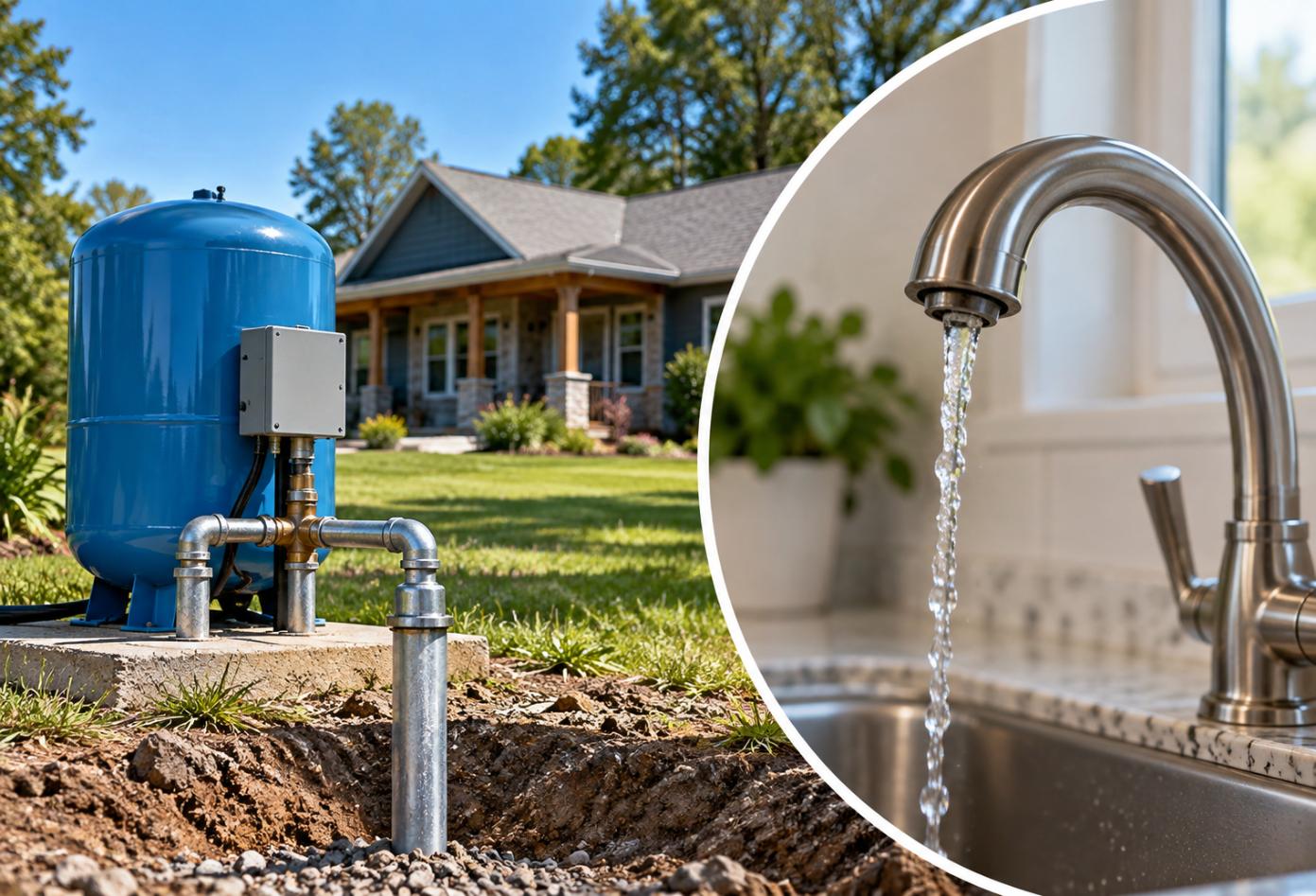
When a Kingston homeowner relies on a private well, a weak shower or slow-filling washing machine can point to more than a plumbing inconvenience. Homes across North Kitsap depend heavily on groundwater, so changes in water pressure can involve the well, pump, pressure tank, filtration equipment, or household plumbing.
Low pressure is especially worth investigating when it appears suddenly or continues getting worse.
What Causes Low Water Pressure in Homes With Wells?
Low water pressure in homes with wells is commonly caused by pressure tank problems, a failing or undersized well pump, clogged filters, mineral buildup, plumbing restrictions, leaks, or changes in the well’s ability to supply water. The correct diagnosis depends on whether pressure is low throughout the house, at certain fixtures, or only during periods of heavy water use.
For Kingston homeowners, identifying where the restriction begins is more useful than simply trying to increase the pressure setting.
What local readers should know
-
Low pressure throughout the entire home often points toward the well system, pressure tank, pump, or main water line rather than one faucet.
-
North Kitsap properties can have very different well depths and groundwater conditions, even within the same general area.
-
Pressure that drops only when several fixtures run may indicate a system capacity or flow problem.
-
A clogged sediment filter or treatment component can sometimes reduce household pressure even when the well and pump are operating.
-
Sudden pressure changes deserve attention because leaks and equipment problems can worsen if left unresolved.
Why Does Low Well Water Pressure Matter in Kingston?
Low well water pressure matters in Kingston because groundwater is an essential local water resource, and private well systems must deliver that water reliably from the aquifer to the home. The problem may affect everyday comfort, but persistent pressure loss can also signal equipment wear, restrictions, leaks, or changing well performance.
The Kitsap Peninsula has a distinctive groundwater environment. Kitsap County documents describe the peninsula as being surrounded by salt water and dependent heavily on groundwater and rainfall for its potable water supply. County planning documents also identify multiple aquifer systems in the Hansville-Indianola area of North Kitsap.
Properties around Kingston, Indianola, Hansville, Port Gamble, and nearby rural areas can therefore have well systems with substantially different configurations and depths.
Crabtree Well Drilling works with well-related needs in the Kingston area. When we evaluate a water-pressure concern, the goal is to determine what part of the water supply system is actually responsible before deciding what needs attention.
What Does Local Groundwater Data Tell Kingston Homeowners?
Local groundwater data shows that North Kitsap has a complex groundwater system rather than one uniform underground water source. Kitsap County planning materials identify five principal aquifer systems in the Hansville-Indianola subarea, and county documents note that some deeper wells around Kingston extend to considerable depths.
Kitsap County has also reported that more than 80 percent of the county’s potable water comes from groundwater. The county describes rainfall as an important source of aquifer recharge on a peninsula with limited freshwater sources.
That does not mean every low-pressure problem is caused by groundwater levels. In many homes, the problem is somewhere between the well and the faucet.
How Can Low Water Pressure Affect a Local Home?
Low water pressure can affect showers, faucets, toilets, dishwashers, washing machines, irrigation, and any other equipment that depends on consistent household water delivery. For a Kingston household, the inconvenience often becomes most noticeable when several people or appliances need water at once.
Pressure problems can also make an underlying system issue easier to notice. A pump that cannot maintain normal performance, a malfunctioning pressure tank, or a restriction in the water line may initially appear as nothing more than a disappointing shower.
What Are the Warning Signs of a Well Pressure Problem?
Warning signs of a well pressure problem include consistently weak flow, large pressure swings, sputtering fixtures, and noticeable changes when multiple fixtures operate. Kingston homeowners should pay attention to changes from their home’s normal water performance.
Common signs include:
-
Water pressure has become weaker throughout the house.
-
Shower pressure drops sharply when another faucet opens.
-
Pressure repeatedly rises and falls while water is running.
-
The well pump appears to cycle unusually frequently.
-
Faucets sputter or deliver inconsistent flow.
-
A sediment filter becomes clogged unusually quickly.
-
Water pressure changed suddenly without an obvious plumbing change.
-
Outdoor water use causes major pressure loss indoors.
When Should You Call a Well Professional?
You should call a well professional when low pressure affects the entire home, repeatedly returns after basic filter checks, is accompanied by unusual pump behavior, or represents a significant change in normal well performance. Problems involving the pump, pressure tank, electrical components, or the well itself require proper diagnosis.
Homeowners can safely check whether individual faucet aerators are clogged and whether an accessible replaceable filter is overdue for service. They can also note when the pressure problem occurs.
Work involving well pumps, electrical controls, pressure tanks, or changes to the well system should go beyond guesswork.
What Are the Common Causes of Low Well Water Pressure?
The most common causes of low well water pressure are pressure tank issues, pump problems, clogged filtration equipment, plumbing restrictions, leaks, and insufficient water delivery under peak demand. The symptoms can overlap, which is why testing the system is often necessary.
Pressure tank problems
The pressure tank helps maintain usable pressure and reduces unnecessary pump cycling. Problems with the tank or its air charge can contribute to pressure fluctuations and abnormal pump operation.
Well pump problems
A worn, damaged, or improperly sized pump may struggle to deliver the pressure and flow a household needs. Pump condition becomes particularly important when pressure has gradually declined.
Clogged filters or treatment equipment
Sediment filters and water-treatment equipment can restrict flow as they accumulate material. Checking serviceable filters is one of the simpler places to begin.
Mineral buildup or plumbing restrictions
Older pipes, valves, fixtures, and treatment components can develop restrictions. If only part of the home has low pressure, the problem may be downstream from the well equipment.
Leaks
A leak between the well and house can reduce available pressure and make the pump work differently than expected. Wet ground or obvious standing water may provide a clue, but underground leaks are not always visible.
Well yield or water-level concerns
A well that cannot supply water as quickly as the household is using it may show pressure or flow problems during periods of high demand. In North Kitsap’s varied aquifer conditions, well-specific testing is more useful than assuming neighboring properties behave the same way.
How Can Kingston Homeowners Prevent Pressure Problems?
Kingston homeowners can reduce avoidable pressure problems by maintaining filters, watching for changes in pump cycling, repairing plumbing leaks promptly, and having persistent well-system problems evaluated before equipment fails completely. Knowing the normal behavior of your system makes unusual changes easier to recognize.
Seasonal outdoor water use deserves attention too. Irrigation and other high-demand activities can expose capacity limitations that are less noticeable during ordinary indoor use.
Avoid repeatedly adjusting pressure controls to compensate for an unexplained problem. Higher settings are not a substitute for identifying a failing component or restriction.
What Results Can You Expect After the Cause Is Identified?
After the cause of low water pressure is identified, the appropriate solution may restore more consistent pressure, improve flow during normal household demand, or correct abnormal pump operation. The result depends on whether the underlying issue involves filtration, plumbing, the pressure system, pumping equipment, or the well itself.
Not every home needs the same repair. A diagnosis helps separate a relatively simple restriction from a problem requiring work on well equipment.
What Mistakes Should Well Owners Avoid?
The biggest mistake well owners can make is assuming every pressure problem requires a stronger pump. Installing or adjusting equipment without identifying the cause can leave the original problem unresolved.
Another mistake is ignoring a clogged filter. The consequence is continued restricted flow. The better approach is to follow the treatment system’s maintenance requirements and determine whether pressure improves after proper filter service.
Finally, avoid repeatedly changing pressure-switch settings as a quick fix. The better approach is to determine why the system is no longer providing its previous performance.
What Is a Common Low-Pressure Scenario in North Kitsap?
A common North Kitsap scenario is a homeowner noticing acceptable pressure at one fixture but a substantial drop when a shower, washing machine, or outdoor hose runs simultaneously. That pattern may point toward limited flow through part of the system or difficulty maintaining pressure under higher demand.
The cause cannot be determined from that symptom alone. Checking filters, pressure-system performance, pump operation, and water delivery helps narrow down the problem.
What Services Can Help Correct Low Well Pressure?
Well-system inspection, pump evaluation, pressure-system troubleshooting, and well-related service can help determine why a home is experiencing low pressure. The appropriate solution should address the source of the problem rather than simply mask its symptoms.
For local homeowners, we can evaluate well-related pressure concerns and help determine the next appropriate step.
Should You Try DIY Troubleshooting or Call a Professional?
DIY troubleshooting is appropriate for simple observations and accessible maintenance, while pump, tank, electrical, and well problems should be professionally evaluated. Homeowners can compare pressure at different fixtures, check whether the problem occurs during high demand, and inspect serviceable filters.
If pressure remains low throughout the house or the pump behaves abnormally, professional troubleshooting is the better next step.
Where Do We Serve Around Kingston?
Our Kingston-area service supports property owners in the surrounding North Kitsap region. Nearby communities include Indianola, Hansville, Port Gamble, Poulsbo, and Suquamish, where groundwater and private well systems are an important part of many properties.
What Can Happen If You Ignore Low Well Water Pressure?
Ignoring persistent low well water pressure can allow a relatively manageable equipment or plumbing problem to become more disruptive. Depending on the cause, continued operation may mean worsening pressure, additional pump wear, wasted water from a leak, or an eventual loss of reliable household water service.
A pressure change does not automatically mean a major well failure, but it is useful information about how the system is operating.
FAQ
Why is my well water pressure suddenly low in Kingston?
Suddenly low well water pressure can result from a clogged filter, leak, pressure tank issue, pump problem, or another restriction in the system. If every fixture in your Kingston home changed at approximately the same time, the cause is more likely to involve a shared part of the water supply system.
Can a bad pressure tank cause low water pressure?
Yes. A pressure tank problem can contribute to inconsistent pressure and abnormal pump cycling. Because the tank works together with the pump and pressure controls, symptoms can resemble other well-system problems. Testing the system is preferable to replacing the tank based only on weak water flow.
Can Kingston wells produce less water during dry periods?
Well performance can be influenced by groundwater conditions, but a pressure change should not automatically be blamed on dry weather. Kitsap County identifies rainfall as an important source of groundwater recharge. A professional evaluation can determine whether the issue involves the well’s water supply or mechanical equipment.
Why does my pressure drop when two faucets are running?
Pressure that drops when multiple fixtures operate can indicate that demand is exceeding the flow available through some part of the system. Possible restrictions include filters, plumbing, pumping equipment, or well capacity. The pattern is particularly useful when troubleshooting because pressure may appear normal during low household demand.
Do wells around Kingston all have similar depths?
No. Well depths can vary significantly because North Kitsap contains multiple aquifer systems and varied geology. Kitsap County groundwater documents describe multiple aquifers within the Hansville-Indianola subarea and document deep wells in the Kingston area. Your own well record and system testing are more useful than a neighbor’s well depth.
Could a clogged water filter cause low pressure in my North Kitsap home?
Yes. A clogged whole-house sediment filter or treatment component can restrict water flow enough to create noticeable pressure problems. If your North Kitsap home uses filtration equipment, checking its recommended maintenance schedule is a reasonable first step before assuming the pump or well has failed.
Who handles drinking-water well information in Kitsap County?
Kitsap Public Health District handles drinking-water well permits and safety matters identified by Kitsap County, while Washington State Department of Ecology maintains resources including well reports and water-right information. The exact requirements that apply can depend on the property and type of well work involved.
How do I know whether the problem is my well or household plumbing?
Compare what happens throughout the home. Low pressure at one faucet often suggests a fixture or localized plumbing restriction, while weak pressure throughout the house points toward a shared filter, main line, pressure system, pump, or well-related problem. Testing is needed when the source is not obvious.
Get More Reliable Well Water Pressure in Kingston
Low water pressure should be diagnosed at its source so your home can have a more reliable water supply without unnecessary guesswork. We can help Kingston and North Kitsap property owners determine whether a well-related pressure problem requires professional attention.