

A well pump that will not shut off is more than an annoyance for a Kingston homeowner. If you rely on a private well in North Kitsap, constant pump operation can signal a pressure problem, plumbing leak, failing component, or a well that is struggling to keep up with demand.
Quick answer: A well pump running constantly usually means the system cannot reach the pressure needed to tell the pump to shut off. Common causes include a leaking pipe or fixture, pressure tank problems, a faulty pressure switch, a worn pump, or reduced water availability in the well. Continuing to run the system without identifying the cause can increase electrical use and place unnecessary wear on the pump.
What local homeowners should know
-
A pump that continues running after every faucet and water-using appliance is turned off should be investigated.
-
Homes on private wells around Kingston and other parts of North Kitsap depend on several components working together to maintain normal household water pressure.
-
Seasonal water use, including irrigation and outdoor watering during the drier part of the Puget Sound summer, can expose an already marginal well or pump system.
-
Loss of pressure does not automatically mean the well itself has failed. Pressure tanks, switches, check valves, plumbing leaks, and pump components can produce similar symptoms.
-
Avoid repeatedly resetting breakers or adjusting pressure controls without knowing why the system is running.
Why Does a Constantly Running Well Pump Matter in Kingston?
A constantly running well pump matters because the pump is designed to cycle off after the system reaches its specified pressure. When that never happens, equipment may experience extended wear while the underlying problem can affect water pressure, electrical consumption, or the reliability of the home’s water supply.
Kingston sits in North Kitsap County, where private wells serve some properties outside larger public water systems. Homes around the greater Kingston area, as well as nearby Indianola, Suquamish, Hansville, and rural areas toward Poulsbo, can have individual well systems with different depths, yields, equipment ages, and water demands.
Crabtree Well Drilling helps property owners evaluate well and pump problems so the cause can be identified rather than guessed at. Once we determine what is keeping the system from reaching shutoff pressure, we can explain the appropriate next step.
What Does Local Well Information Tell Kingston Homeowners?
Local well information shows that private water systems require ongoing attention to both their equipment and their water source. Kitsap Public Health District recommends maintaining pressure tanks and regularly testing private well water, reinforcing that reliable well ownership involves more than waiting until the water stops flowing.
Kitsap Public Health District reported that 194 of 442 private-water status reports completed in 2025 identified significant problems. That figure covers Kitsap County rather than constant-running pumps specifically, but it demonstrates why routine inspection of private water systems deserves attention.
How Can a Constantly Running Pump Affect Your Property?
A continuously operating pump can affect a Kingston property by accelerating pump wear, increasing energy use, and allowing an unresolved water-system problem to become more disruptive. If the cause is a leak, the pump may be replacing water that is escaping somewhere instead of simply maintaining household pressure.
Low or inconsistent pressure can also make everyday tasks difficult. Showers may weaken when another fixture is opened, appliances may take longer to fill, and outdoor watering can make the problem more noticeable.
The longer the pump runs without reaching shutoff pressure, the more important it becomes to determine whether the problem is in the house plumbing, pressure system, pump, piping, or well.
What Are the Warning Signs of a Well Pump Problem?
Warning signs of a well pump problem include continuous operation, changing pressure, unusual sounds, and water interruptions. Kingston homeowners should pay particular attention when several symptoms appear together because they can help narrow down whether the problem involves pressure controls, water demand, or the pumping equipment itself.
Watch for:
-
The pump continues running even though no water is being used.
-
Water pressure is noticeably lower than normal.
-
Pressure rises but never reaches the pump’s shutoff setting.
-
Faucets surge between stronger and weaker flow.
-
The pump turns on and off very rapidly instead of running continuously.
-
Air spits from faucets or water flow becomes inconsistent.
-
The pressure gauge behaves abnormally or remains unusually low.
-
The pump or associated equipment is making sounds you have not heard before.
When Should You Call a Well Professional?
You should call a well professional when the pump continues running after household water use has stopped, normal pressure cannot be restored, or you suspect a problem below ground or inside the well. Basic visual checks are reasonable, but electrical controls and down-well equipment are not good areas for trial-and-error repairs.
Homeowners can safely confirm that faucets, toilets, irrigation systems, hose bibs, and obvious plumbing fixtures are not running or leaking. You can also observe the pressure gauge without adjusting anything.
If the pump continues to operate, professional testing can determine whether the system is losing pressure or simply unable to build enough pressure.
What Commonly Causes a Well Pump to Run Constantly?
The most common causes of constant well pump operation are water leaks, pressure-system faults, pump wear, damaged piping, and situations where the well cannot supply water as quickly as the system is trying to draw it. The correct diagnosis depends on how the pressure behaves and what the equipment does during testing.
1. A leak somewhere in the system
A leaking toilet, underground water line, hose connection, or other plumbing component can keep pressure from reaching the shutoff point. Even a leak that is difficult to see may cause repeated or continuous pumping.
2. Pressure tank problems
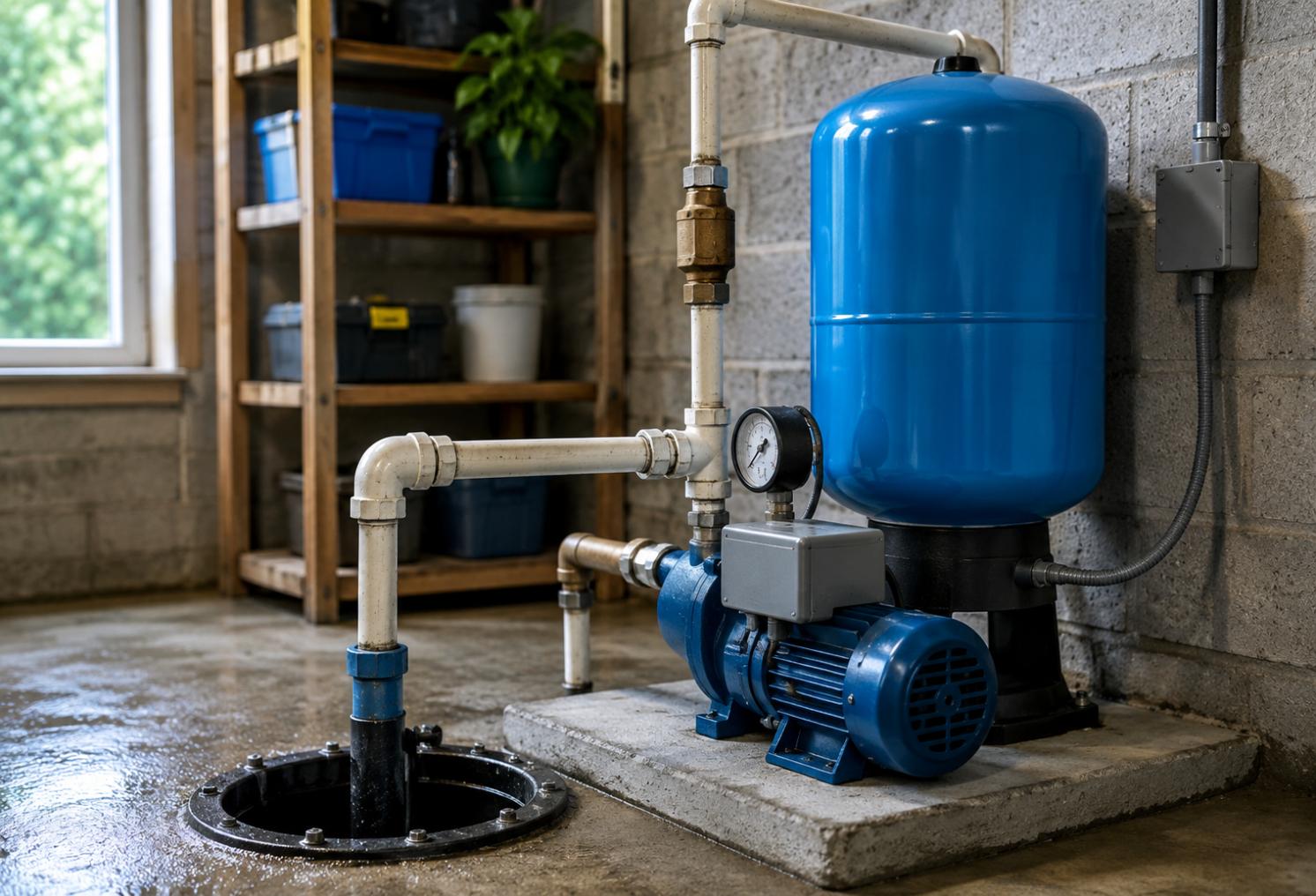
The pressure tank helps regulate pump cycling. If the tank is damaged, improperly charged, or otherwise malfunctioning, pump operation can become abnormal.
3. A faulty pressure switch
The pressure switch tells the pump when to start and stop based on system pressure. A switch or associated pressure-control problem may prevent normal shutoff.
4. A worn or undersized pump
A pump that has lost performance may run for long periods while struggling to achieve the required pressure, especially during periods of heavier household water demand.
5. A damaged pipe or check valve
Leaks or failures between the pump and pressure system can allow pressure or water to escape, forcing the pump to keep working.
6. Reduced well production
During periods of high demand, a lower-producing well may not recover quickly enough to support continuous heavy water use. Outdoor watering during North Kitsap’s drier summer months can make an existing supply limitation easier to notice.
How Can Kingston Homeowners Help Prevent Pump Problems?
Kingston homeowners can help prevent pump problems by watching changes in pressure, reducing unnecessary high-demand water use, maintaining accessible well equipment, and addressing abnormal pump cycling early. Preventive attention is particularly valuable before summer irrigation increases household demand or before a small pressure issue turns into a loss of water.
Periodically observe how long the pump runs during normal water use. Check accessible plumbing for leaks and keep the wellhead and pressure-system area protected and accessible.
Kitsap Public Health District also advises private-well owners to keep pressure tank maintenance current and recommends annual bacteria testing and nitrate testing every three years.
DIY troubleshooting should stop before opening electrical controls, pulling a pump, modifying pressure settings, or attempting down-well repairs.
What Should You Expect After the Problem Is Diagnosed?
After diagnosis, you should expect the repair recommendation to address the actual reason the pump cannot cycle normally rather than simply replacing parts at random. Depending on the findings, the solution may involve plumbing repairs, pressure-system service, pump repair or replacement, underground piping work, or further evaluation of well performance.
Once the underlying issue is corrected, the system should be able to build pressure appropriately and cycle according to its operating settings. The exact solution and resulting performance depend on the condition and design of the individual well system.
What Mistakes Should You Avoid?
The biggest mistakes are ignoring continuous operation, repeatedly resetting equipment, and assuming that every pressure problem requires a new well pump. A better approach is to observe the symptoms, eliminate simple household water use, and have the system tested when normal cycling does not return.
Mistake: Assuming low pressure means the well is dry.
Consequence: You may overlook a pressure tank, switch, pipe, or pump problem.
Better approach: Diagnose the complete system before deciding on a solution.
Mistake: Letting the pump run indefinitely.
Consequence: Extended operation can add unnecessary wear.
Better approach: Arrange an evaluation if the pump will not reach shutoff pressure.
Mistake: Adjusting the pressure switch without testing the system.
Consequence: Changing settings can mask the symptom without fixing its cause.
Better approach: Determine why pressure is not behaving normally first.
What Is a Common Well Pump Scenario in Kingston?
A common Kingston scenario is a homeowner noticing that the pump continues running after morning showers, laundry, or outdoor watering even though it previously shut off normally. After all fixtures are closed, the pressure gauge rises slowly or stops below the pressure required to shut the pump off.
That pattern could come from several different problems, including a leak, pump wear, pressure controls, or limited well production. It is not enough by itself to identify the failed component, which is why testing the system is more useful than guessing.
What Services Can Solve a Constant-Running Pump?
Services that can solve a constant-running pump problem include well-system troubleshooting, pump service, pressure-system evaluation, and well-performance assessment. The right service depends on whether the problem is above ground, in the water line, at the pump, or related to the well’s ability to supply water.
We can evaluate the operating symptoms and help determine what part of the system requires attention.
Should You Repair the Pump or Replace It?
Repair versus replacement depends on the failed component, the condition of the pump, system performance, and whether repairing one part will provide a practical long-term solution. A pressure-switch or tank problem may not require pump replacement, while a severely worn pump may make replacement the more sensible option.
The key is diagnosis first. Replacing a pump without confirming the cause will not solve a leaking water line, pressure problem, or low-producing well.
What Areas Around Kingston Can Experience Well Pump Problems?
Well pump problems can affect private-well properties throughout Kingston and surrounding North Kitsap communities. Rural and semi-rural properties near Hansville, Indianola, Suquamish, Poulsbo, and other parts of Kitsap County may rely on private water systems with their own individual equipment and operating conditions.
Each property should be evaluated according to its actual well and pump setup.
What Can Happen If You Ignore a Constantly Running Pump?
Ignoring a constantly running pump can allow unnecessary equipment wear or an existing leak, pressure problem, or water-supply issue to continue. What begins as unusual cycling may eventually lead to reduced pressure or a more disruptive loss of water if the underlying problem worsens.
Prompt diagnosis does not mean every situation requires major repairs. It means you can find out what is happening before deciding what work actually makes sense.
FAQ
Why won’t my well pump shut off in Kingston, WA?
A well pump that will not shut off usually cannot reach its required shutoff pressure. The cause could be a leak, pressure tank issue, faulty pressure switch, worn pump, damaged pipe, or reduced well output. Testing pressure and pump performance can identify which part of the system is responsible.
Can summer water use make my Kingston well pump run longer?
Yes, heavier summer water use can make a Kingston well pump run longer, particularly when irrigation, gardens, laundry, and normal household demand overlap. Higher demand may also expose a pump that is losing performance or a well that recovers more slowly than the household is using water.
Does a constantly running pump mean my Kingston well is going dry?
No, constant pump operation does not automatically mean a Kingston well is going dry. Several equipment and plumbing problems can create the same symptom, including water-line leaks, pressure tank faults, switch problems, and pump wear. Well production should be evaluated before concluding that the water source is the problem.
Should I turn off a well pump that will not stop running?
Turning off the pump may be appropriate if you believe continued operation could damage equipment or if there is an obvious major leak, but doing so also stops the home’s water supply. If you are uncertain, avoid electrical repairs and contact a well professional for guidance and diagnosis.
How do I know whether my pressure tank is causing the problem?
A pressure tank problem may cause unusual pump cycling, pressure fluctuations, or difficulty maintaining normal system pressure, but those symptoms can overlap with other failures. Testing the tank and observing the pump’s pressure cycle is more reliable than diagnosing the tank from water pressure alone.
Are private wells regulated in Kitsap County?
Yes, private well construction and certain property-related water requirements in Kitsap County are subject to local and Washington state rules. Kitsap Public Health District oversees aspects of private water supply approval, inspection, and water-quality requirements, including requirements associated with certain well replacements and property transfers.
How often should Kingston private-well water be tested?
Kitsap Public Health District recommends that private-well owners test drinking water for bacteria annually and nitrate every three years. Water-quality testing does not diagnose a constantly running pump, but it is an important part of maintaining a private water supply in Kingston and elsewhere in Kitsap County.
Can a leaking underground pipe cause my pump to run continuously?
Yes, an underground leak can keep a well pump running because the system continually loses water and pressure before reaching its shutoff setting. Since buried leaks may not create an obvious puddle, system pressure testing can help distinguish a hidden leak from pump, tank, or well-performance problems.
Protect Your Kingston Well System Before a Small Problem Gets Bigger
A pump that refuses to shut off is a signal worth investigating. We can help determine whether the problem comes from the pump, pressure system, piping, or well so you can make an informed repair decision.